


Glacial landscapes evoke a deep sense of connection among the past, present, and future. They formed in a time long past, are changing faster than some of our powers of observation can keep up with, and remain a crucial component of the planet’s response to our increasing human footprint. During my two and a half weeks camped at Cape Evans, Antarctica, I became entranced by the Barne Glacier each evening, as it stared back at me from across the bay.
On a calm night, the only sound that could be heard was the whistling of the breeze across its glacial crevasses. This blend of grandeur and fragility was a constant reminder of the glacier’s immensity - of the depths it contained below its icy surface. Night after night, staring at the Barne, I was fixated on the glacial edge where it intersected the sea ice - the remaining hundreds of meters of ice obscured from our land-borne view.

As we slowly edged closer and closer to the glacier with our sub-ice explorations, I became determined to get at least a glimpse of what lay below, searching for connections between the complex subglacial networks that funnel below these glacial features and the seafloor seeps we have been finding around the bay.
In our final days, as we prepared to pack up camp, we summoned the last of our energy to chainsaw a new hole in the sea ice, just outside the icefall zone of the glacier. To the best of our knowledge, we would be the first humans to get a glimpse of the hidden icy depths of the Barne.
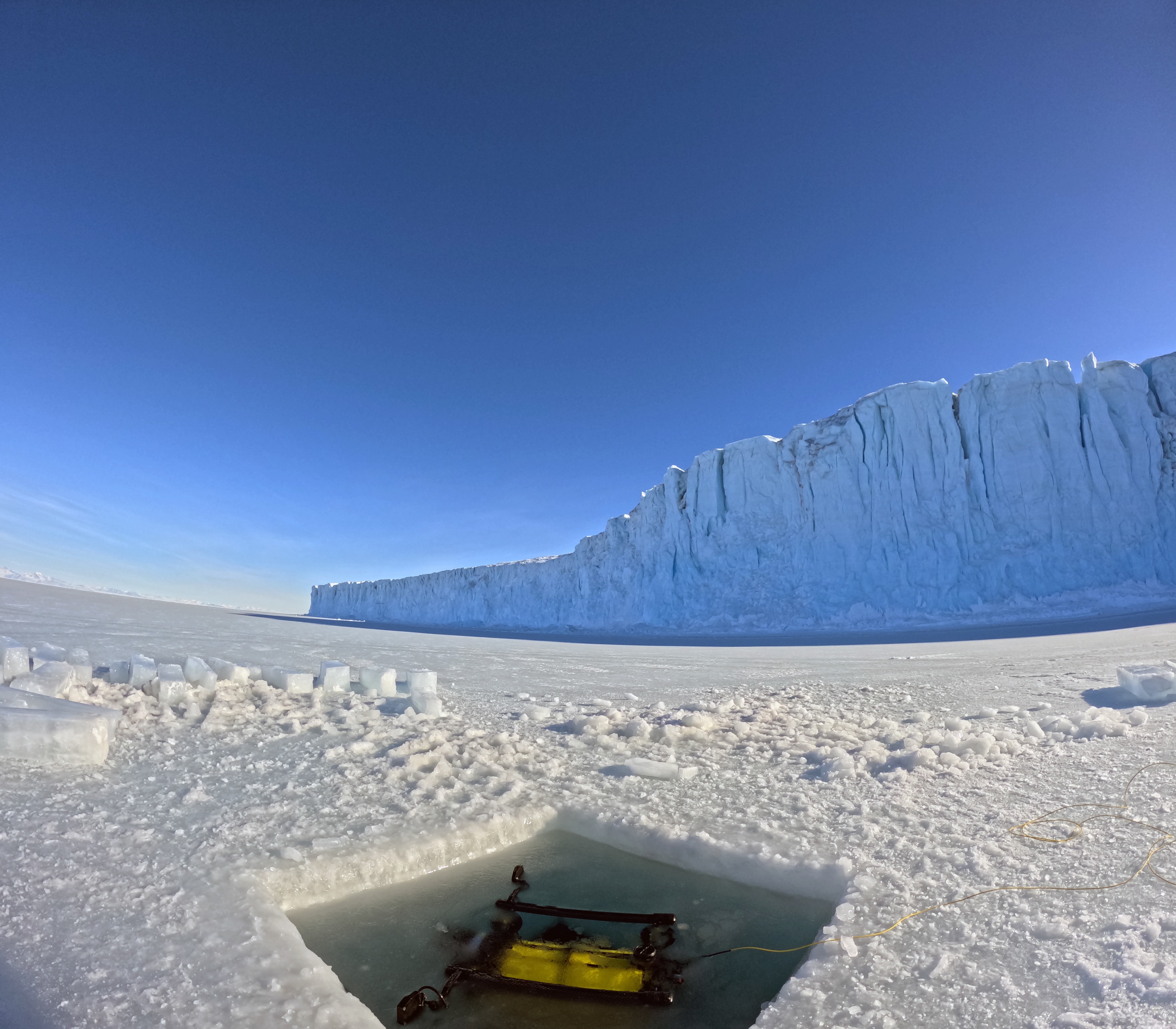
As we descended below the 1-meter-deep hole in the sea ice, we saw a deep blue expanse as far as the eye could see, but, as we adjusted our eyes, the faint outline of the submerged glacier appeared. As we approached closer, we were awestruck by its otherworldly presence, rising from the seafloor, curving and reflecting light as it has for tens of thousands of years. The beauty of the scene intertwined with a reminder of all that has come before us and all that may follow.


